Generative Engine Optimization for Local Search: Why AI Search Engines Don't Cite Your Business (Yet)
AI search engines like ChatGPT and Perplexity are answering local queries without citing your business. Learn GEO optimization to fix your AI search vis...
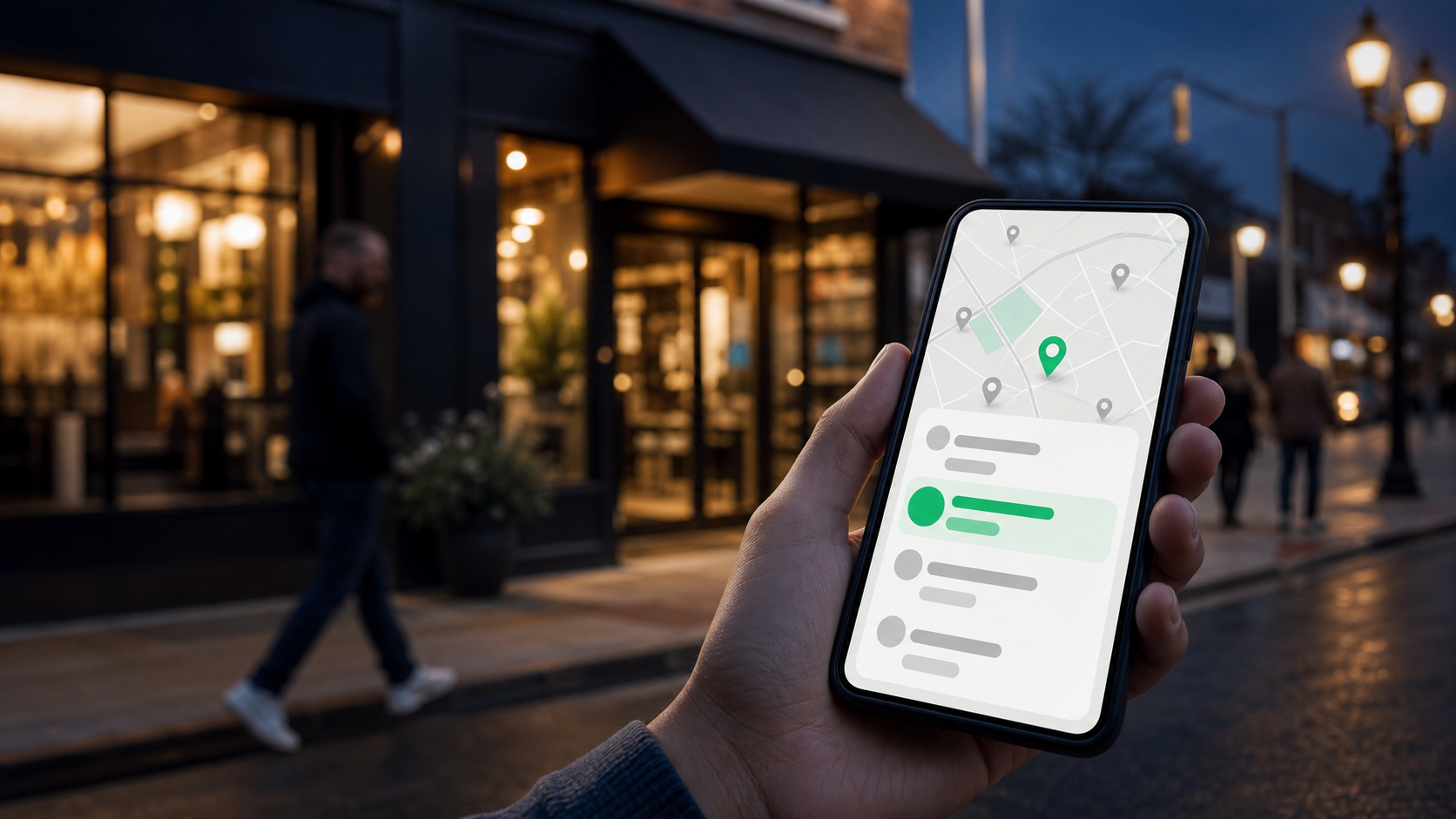
Generative engine optimization for local search is the practice of structuring your business information so AI-powered search engines — like ChatGPT, Perplexity, and Google AI Overviews — cite your business when users ask local questions. If your business isn't showing up in these AI-generated answers, you're invisible to a growing segment of high-intent local searchers who never click a traditional blue link.
Why This Matters for Local Businesses
Here's what's happening right now. A homeowner opens ChatGPT and types: "Who's the best electrician in Boise for a panel upgrade?" ChatGPT generates a list of three electricians with brief explanations. Your business is not on it. A couple searches Perplexity for "top-rated estate planning attorney near me with flat fees." Perplexity cites two firms. Neither is yours. These are not hypotheticals. AI search engines are already answering local service queries. And they're pulling from a limited set of sources — businesses with strong structured data, consistent citations, high-authority backlinks, and clear local signals. If your business lacks those signals, you don't exist in the AI answer. It's not a ranking problem. It's a data problem. For local professional service providers — attorneys, accountants, financial advisors, insurance agents, real estate professionals — this is especially dangerous. Your clients research heavily before booking. They ask detailed questions. AI search engines are increasingly their first stop. You built a practice on referrals and reputation. But when a referred prospect searches your name plus "reviews" or "specializes in," and an AI engine cites a competitor instead, that referral gets redirected.
The Gap Most Businesses Miss
Most local businesses are not invisible because they're bad businesses. They're invisible because competitors have stronger digital authority, better citations, more referring domains, and clearer local signals. We call this the AI search visibility gap. It's different from the traditional SEO gap. Traditional SEO means optimizing for Google's ranked results — the ten blue links and the Map Pack. GEO optimization means optimizing for the answers AI engines generate by synthesizing information from multiple sources. The two overlap, but they're not the same. You can rank #1 in the Google Map Pack and still not get cited in an AI Overview or a ChatGPT response. Why? Because AI engines weigh factors differently. They prioritize:
- Structured data that clearly defines your business category, services, and location
- Citation consistency across dozens of directories and data aggregators
- Referring domain authority — how many trusted sites link to and reference your business
- Review volume, recency, and sentiment across multiple platforms
- Content depth that answers specific local questions
Authority gaps can be dramatic. In one benchmark, a site with 9 referring domains was competing against a median of 864 competitor referring domains — a 96x gap. When an AI engine decides which business to cite, that gap matters. Most local business owners have never checked whether they appear in AI-generated answers for their core services. That's the gap. You can't fix what you don't know is broken. See where you're losing clients to AI search invisibility — get a free gap analysis that checks your GEO readiness.
How to Fix It
GEO optimization isn't a mystery. It's a methodical process of building the signals AI engines trust. Here's where to start.
1. Audit Your AI Search Visibility Right Now
Open ChatGPT, Perplexity, and Claude. Search the queries your ideal clients would use. "Best [your profession] in [your city]" "[Your service] near me with good reviews" "Who handles [specific problem] in [your metro area]" Are you cited? Are your competitors? Take screenshots. This is your baseline. Then check Google AI Overviews for the same queries. Google surfaces AI-generated answers above the traditional results for many local queries. If you're not in those overviews, you're losing visibility even on Google.
2. Fix Your Structured Data
AI engines read schema markup to understand what your business is, where it operates, and what services you offer. At minimum, your website needs:
- LocalBusiness schema with correct category, address, phone, and geo-coordinates
- Service schema for each core service with clear descriptions
- FAQ schema on service pages to feed AI answer snippets
- Review schema to surface your aggregate rating
Most local business websites have broken, incomplete, or missing structured data. This is table stakes for GEO optimization.
3. Build Citation Consistency
Citations are mentions of your business name, address, and phone number across directories, data aggregators, and platforms. AI engines cross-reference citations to verify your business exists and serves a specific area. Inconsistent citations — different addresses, phone numbers, or business names across directories — confuse AI engines. Confused engines don't cite you. Focus on:
- Core data aggregators (Neustar Localeze, Data Axle, Foursquare)
- Major directories (Yelp, BBB, industry-specific directories)
- Google Business Profile (fully completed, with services, Q&A, and weekly posts)
4. Earn Referring Domains That Signal Authority
AI engines treat backlinks as trust votes. But not all links are equal. A link from your local chamber of commerce website carries more weight than a random blog comment. Prioritize:
- Local news mentions
- Industry association memberships with online directories
- Guest content on trusted local or trade publications
- Sponsorships of local events with online recognition
One high-authority local link can shift your AI visibility more than fifty low-quality links.
5. Generate Review Velocity Across Platforms
AI engines don't just count your Google reviews. They aggregate review signals from multiple sources. A business with 80 Google reviews but zero Yelp or industry-platform reviews looks less authoritative than a competitor with 40 reviews spread across four platforms. Build a system that consistently generates reviews on Google, your industry-specific platforms, and general directories. Recency matters. A steady flow of recent reviews signals an active, trusted business. Our generative engine optimization service builds all five of these signals systematically. But even tackling the audit and structured data fixes yourself will move the needle.
What DeployAIAgents Looks For in a Gap Analysis
When we run a free gap analysis for a local service business, we're not just checking your Google ranking. We're mapping your entire AI search footprint. Here's what the analysis reveals: What's broken. Missing or malformed structured data. Inconsistent citations across directories. Review profiles that haven't been updated in months. Content that doesn't answer the questions AI engines are pulling from. What's missing. Referring domains your competitors have that you don't. Service pages that don't exist but should. FAQ content that would feed AI answers. Local signals that AI engines look for but can't find for your business. Where competitors are winning. We compare your AI visibility against your top three local competitors. You'll see exactly which queries they're being cited for and which signals they've built that you haven't. Where leads are lost. The analysis connects visibility gaps to revenue leakage. If you're invisible for "estate planning attorney Austin" in AI search, we estimate the monthly search volume and the potential clients you're losing. What to fix first. Not everything needs to be fixed at once. We prioritize the fixes that will close the biggest gaps fastest — usually structured data and citation cleanup, followed by review generation and link building. Get your personalized growth plan based on your actual AI search visibility gaps, not generic recommendations.
What a 12-Month Growth Plan Should Include
A real GEO and local search growth plan isn't a checklist of SEO tasks. It's a month-by-month roadmap that builds the authority signals AI engines trust. Months 1–2: Foundation. Structured data audit and implementation. Citation audit and cleanup across all major aggregators and directories. Google Business Profile optimization. Baseline AI visibility measurement. Months 3–4: Content and authority building. Service-page content written to answer the specific questions AI engines surface. FAQ content deployed with proper schema. Initial outreach for local backlinks and association memberships. Months 5–8: Review and reputation acceleration. Automated review generation systems deployed across platforms. Review response protocols established. Social proof integrated into website and GBP. Months 9–12: Expansion and reinforcement. Advanced content targeting long-tail local queries. Additional referring domain acquisition. Ongoing citation monitoring. Monthly AI visibility re-measurement against competitors. Throughout all 12 months: local SEO fundamentals maintained, Google Map Pack rankings tracked, and AI Overview presence monitored. This is not theory. It's the plan structure we deploy for local professional service providers who need to be visible wherever their clients search — whether that's Google, ChatGPT, Perplexity, or the next AI engine that launches. Our full suite of services covers every layer: from local SEO and Map Pack optimization to conversion-focused website work and review automation.
Frequently Asked Questions
What is generative engine optimization for local search?
Generative engine optimization (GEO) for local search is the process of structuring your business's online presence so AI-powered search engines cite your business when answering local queries. It combines structured data, citation consistency, review signals, and authority building to make your business the most citable answer.
How is GEO different from traditional local SEO?
Traditional local SEO optimizes for Google's ranked results and Map Pack. GEO optimizes for AI-generated answers in ChatGPT, Perplexity, Google AI Overviews, and similar engines. GEO requires stronger structured data, broader citation consistency, and higher referring domain authority because AI engines synthesize answers from multiple sources rather than ranking pages.
Why doesn't my business show up in ChatGPT or Perplexity?
Your business likely lacks one or more key signals: complete structured data on your website, consistent citations across major data aggregators, sufficient referring domains from trusted local sources, or enough recent reviews across multiple platforms. AI engines need clear, consistent, authoritative data to cite a business.
Can I optimize for Google AI Overviews specifically?
Yes. Google AI Overviews pull heavily from structured data, Google Business Profile content, high-authority backlinks, and content that directly answers user questions. Optimizing your schema markup, keeping your GBP complete and active, and publishing FAQ-rich content improves your chances of appearing in AI Overviews.
How long does GEO optimization take to show results?
Initial improvements — like fixing structured data and cleaning up citations — can shift AI visibility within 4–8 weeks. Building the referring domain authority and review volume needed for competitive local queries typically takes 6–12 months. GEO is an ongoing signal-building process, not a one-time fix.
Do reviews on platforms other than Google matter for GEO?
Yes. AI engines aggregate review signals from multiple sources. A business with reviews spread across Google, Yelp, industry-specific platforms, and general directories appears more authoritative than one with reviews on a single platform. Review velocity and recency across platforms both matter.
Is GEO replacing traditional SEO?
No. GEO and traditional SEO are complementary. Many users still click traditional search results and Map Pack listings. But AI-generated answers are capturing an increasing share of local research queries. Businesses need both a strong traditional SEO foundation and GEO-specific optimization to capture all available visibility. Ready to find the gaps costing your business clients? Get your free gap analysis and see what's broken, what's missing, and what to fix first. Explore more insights on our blog or see how generative engine optimization builds the authority signals AI search engines demand. Last updated: July 2026
Ready to find the gaps costing your business clients?
Get your free gap analysis and see what's broken, what's missing, and what to fix first.
Get My Free Gap Analysis