
Local Business Visibility Gap Analysis: Why Competitors Show Up First (And You Don't)
A local business visibility gap analysis reveals why competitors rank first while you lose calls. Find the leaks costing you booked clients. Get your fr...
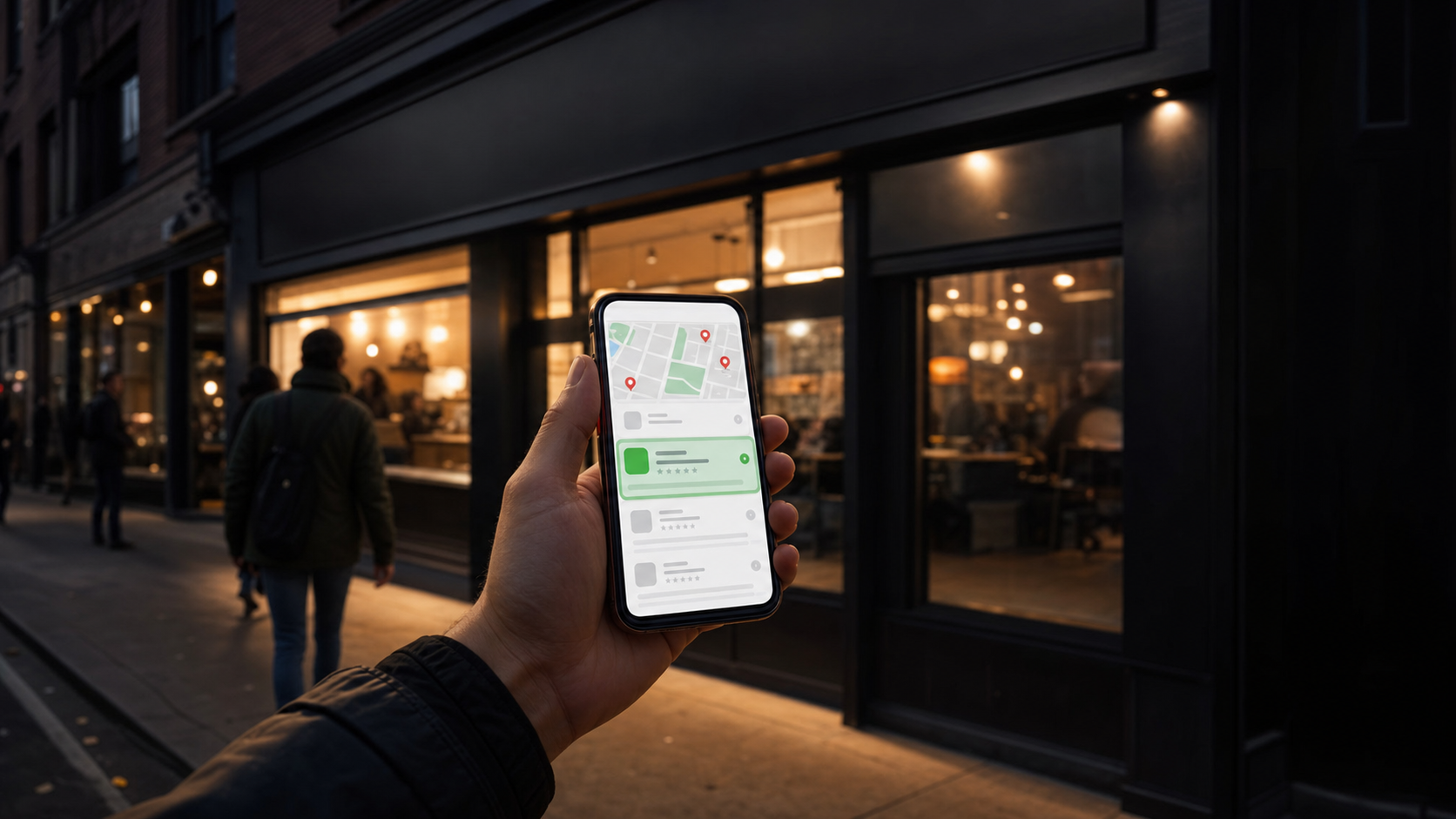
# Local Business Visibility Gap Analysis: Why Competitors Show Up First (And You Don't) Your competitors are not necessarily better lawyers. They simply have stronger local search signals, more referring domains, and cleaner citations — and Google rewards them with top placement while your firm sits on page two where no one looks. A local business visibility gap analysis pinpoints exactly which signals you are missing and why potential clients never see your name.
Why This Matters for Local Businesses
A personal injury attorney in Phoenix loses 22 potential clients every month. Not because her firm is bad. Not because her fees are too high. She loses them because when someone types "car accident lawyer near me" at 2 a.m. from the emergency room parking lot, her competitor's Google Business Profile appears in the Map Pack — and hers does not. That is the cost of a visibility gap. It is not theoretical. It is measured in missed calls, unsigned retainers, and revenue that flows to the firm with better local SEO infrastructure. For law firms, the math is brutal. A single missed call can represent $5,000 to $50,000 in lifetime client value depending on practice area. Multiply that by 10, 20, or 50 missed calls a month. The gap is not small. It is a slow bleed that most firms never diagnose because they are looking at the wrong metrics. Most business owners check their website ranking for one keyword and assume everything is fine. They are not seeing the full picture. They are not seeing the 47 other high-intent search terms where competitors appear and they do not. They are not seeing the citation inconsistencies that confuse Google. They are not seeing the authority gap that keeps their firm buried.
What a Visibility Gap Actually Costs a Law Firm
Let's get specific. A family law practice in a mid-sized metro area might see these numbers:
- Map Pack visibility: Missing from the top 3 for "divorce lawyer [city]" means losing 60-70% of local search clicks.
- Organic ranking gap: Sitting at position 8 instead of position 1 means capturing roughly 3% of clicks instead of 28%.
- Mobile search penalty: 76% of local searches result in a call or visit within 24 hours. If your site loads slowly or your Google Business Profile is incomplete, those searches go to competitors.
- Citation inconsistency: Different phone numbers across 12 directories. Google sees this and lowers your local ranking because it cannot confirm your business is legitimate.
None of this is visible on a surface-level ranking check. It requires a systematic local business visibility gap analysis that audits every signal Google uses to decide who shows up first.
The Gap Most Businesses Miss
Most local businesses are not invisible because they are bad businesses. They are invisible because competitors have stronger digital authority, better citations, more referring domains, and clearer local signals. This is the visibility gap — and it is the most expensive gap in local marketing because you cannot fix what you cannot see.
What Creates the Visibility Gap
The visibility gap is not one thing. It is a collection of missing or weak signals that compound to push your business down in local search results. Here are the components that matter most: Google Business Profile completeness and activity. Many law firms set up their profile once and forget it. Competitors who post weekly updates, respond to reviews within 24 hours, and maintain accurate service categories get prioritized in the Map Pack. Google interprets inactivity as a signal that the business is less engaged — and less relevant. Citation consistency across the web. Your firm's name, address, and phone number (NAP) must be identical everywhere they appear. A "Suite 300" on one directory and "#300" on another creates a conflict Google must resolve. When Google is unsure, it defaults to showing a competitor with cleaner signals. Referring domain authority. This is where the gap gets dramatic. One law firm might have 9 referring domains pointing to their site. Their competitor in the Map Pack might have 864. That is a 96x gap in authority signals. Google treats backlinks from reputable local sources — chambers of commerce, legal directories, local news sites — as votes of confidence. Fewer votes, lower visibility. Localized content relevance. A competitor who publishes pages targeting "[practice area] lawyer in [specific neighborhood]" will outrank a firm that only has a generic "Practice Areas" page. Google rewards specificity. Most firms produce content that is too broad to compete for high-intent local searches. Review velocity and response rate. It is not just about having 50 five-star reviews. It is about getting new reviews consistently and responding to every one. A firm that gets 3 new reviews per week and responds within hours signals ongoing relevance. A firm that collected reviews in 2023 and stopped looks stagnant.
The Authority Gap Connection
Visibility and authority are linked. A local business visibility gap analysis often reveals that the root cause of poor visibility is an authority deficit — not enough trusted sites linking to yours, not enough consistent citations, not enough signals that tell Google your firm is the obvious answer for a local query. This is why throwing money at Google Ads while ignoring your local SEO infrastructure is a losing strategy. You can buy visibility temporarily. You cannot buy the authority signals that create sustainable local rankings. That has to be built. And it starts with knowing exactly what is missing.
How to Fix It
Fixing a visibility gap requires a systematic approach. Here are five specific actions that move the needle for local service businesses — especially law firms competing in crowded metro markets.
1. Audit Your Google Business Profile Completely
Open your GBP dashboard and check every field. Is your primary category correct? Are all secondary categories filled? Are your service areas defined by city or by radius? Are your hours accurate? Is your description written with primary keywords naturally included? Then check your activity. When was your last post? When was your last photo upload? When was the last time you responded to a review? A dormant profile is a ranking liability. For law firms, add practice-area-specific service listings. Do not just list "Law Firm" — list "Personal Injury Attorney," "Divorce Lawyer," "Estate Planning Attorney" as services where applicable. Google uses these to match you to specific queries.
2. Run a Full Citation Audit
Use a tool or a manual search to check your NAP across the top 30 local directories — Yelp, Avvo, Justia, FindLaw, BBB, Yellow Pages, and industry-specific legal directories. Any inconsistency is a problem. Fix every variation. "123 Main St, Suite 300" and "123 Main Street, #300" are not the same to Google. Standardize to one format and update every listing. This is tedious work but it directly impacts local ranking.
3. Close the Referring Domain Gap
You cannot build 800 referring domains overnight. But you can start with the highest-impact opportunities. Local bar association directories. Chamber of commerce membership pages. Sponsorships of local events that link back to your site. Guest articles on legal industry sites. Local news features. Each new referring domain from a locally relevant, reputable source narrows the authority gap. Track your competitors' backlink profiles. See where they are listed that you are not. Build a prioritized list and work through it methodically.
4. Build Location-Specific Content Pages
If you serve multiple cities or neighborhoods, create dedicated pages for each. A "Divorce Lawyer in Scottsdale" page with unique content, local references, and clear service descriptions will outperform a generic "Divorce Law" page for Scottsdale searches. Do not copy-paste and change the city name. Google detects thin duplicate content. Each page needs genuine local relevance — mention local courthouses, filing procedures specific to that jurisdiction, neighborhood landmarks. This signals real local presence.
5. Systematize Review Generation
Set up a process that requests reviews from every satisfied client. Automate it where possible. Make it easy — send a direct link to your Google review page. Respond to every review within 24 hours, even the negative ones. Google tracks response time and factors it into local ranking. Consistency beats volume. Fifty reviews collected over two years with no new activity looks worse than 30 reviews with 2-3 new ones arriving every week. Freshness matters.
What DeployAIAgents Looks For in a Gap Analysis
When we run a free gap analysis for a local law firm, we are not just checking rankings. We are auditing the entire system that determines whether potential clients find you or your competitor. Here is what the analysis reveals: What is broken. We identify technical issues — GBP errors, citation inconsistencies, site speed problems, mobile usability failures — that actively harm your visibility. These are not theoretical problems. They are specific, documented issues that suppress your local ranking. What is missing. We map the gaps between your current local SEO infrastructure and what top-ranking competitors have in place. Missing service pages. Missing directory listings. Missing review velocity. Missing content targeting high-intent local searches. Where competitors are winning. We benchmark your firm against the top 3-5 competitors in your market. We analyze their referring domains, their citation coverage, their GBP activity, their content strategy. You see exactly what they are doing that you are not. Where leads are lost. We trace the path from search to call. Are you visible for the searches that matter? Is your GBP converting views to calls? Is your website turning visitors into consultation requests? We find the specific points where potential clients drop off. What to fix first. Not everything matters equally. We prioritize the fixes that will have the biggest impact fastest — the 20% of actions that produce 80% of the visibility improvement. What the next 12 months should look like. A visibility gap does not close in a week. It requires a structured, sustained plan. Our local SEO services build the authority infrastructure that creates lasting visibility — not quick wins that fade.
What a 12-Month Growth Plan Should Include
A real growth plan is not a list of SEO tasks. It is a sequenced strategy that builds compounding visibility over time. Here is what should be in yours: Months 1-3: Foundation and Triage. Fix critical errors. Clean up citations. Optimize the Google Business Profile. Address technical SEO issues on the website. Set up proper call tracking and form tracking so you know which visibility improvements actually produce clients. Months 4-6: Authority Building. Execute a referring domain acquisition strategy. Publish localized content targeting high-intent practice area searches. Build review velocity. Begin appearing for long-tail local queries that competitors have overlooked. Months 7-9: Expansion and Optimization. Expand content to cover more neighborhoods and practice areas. Optimize for generative engine optimization — ensuring your firm appears in AI Overviews, ChatGPT, and Perplexity results when potential clients ask about legal services in your area. Strengthen internal linking structure. Months 10-12: Dominance and Defense. Consolidate gains. Monitor competitor moves. Maintain review velocity. Refresh content. Expand into adjacent practice areas or geographic zones. Build systems that sustain visibility without constant manual effort. This is the framework we use to build comprehensive marketing systems for law firms. It works because it addresses root causes, not symptoms. Most firms that try to fix visibility on their own patch one leak while three others open. A structured plan closes them systematically.
Frequently Asked Questions
What is a local business visibility gap analysis?
A local business visibility gap analysis is a systematic audit that identifies why your business is not appearing in local search results, Map Pack listings, and AI-powered search tools when potential clients search for your services. It examines Google Business Profile health, citation consistency, referring domain authority, review signals, content relevance, and competitor positioning to pinpoint exactly what is suppressing your visibility.
Why do my competitors rank first on Google when I have more experience?
Google does not rank businesses based on experience or quality of service. It ranks based on local search signals — GBP completeness, citation accuracy, review velocity, referring domain count, content relevance, and proximity. Your competitors likely have stronger signals across these categories, not better legal skills. A local business visibility gap analysis identifies which specific signals they are winning on.
How long does it take to close a local search visibility gap?
Meaningful visibility improvement typically takes 3-6 months of consistent work. The first 30-60 days focus on fixing critical errors — citation cleanup, GBP optimization, technical SEO — which can produce quick wins. Building referring domain authority and content depth takes longer. A full 12-month plan creates compounding visibility that competitors cannot easily replicate.
Can I fix my visibility gap without hiring an agency?
You can address basic issues yourself — updating your GBP, fixing obvious citation errors, asking for reviews. But systematic gap closure requires tools, expertise, and consistent execution that most law firm owners do not have time for. The firms ranking above you are often working with dedicated local SEO providers who execute daily. DIY efforts rarely close the gap against competitors with professional support.
What is the difference between organic ranking and Map Pack visibility?
Organic ranking refers to the traditional blue-link search results below ads and Map Pack listings. Map Pack visibility refers to the top 3 local business listings that appear with a map, typically above organic results. The Map Pack uses different ranking factors — proximity, GBP signals, and reviews are weighted more heavily. Many law firms rank decently in organic results but are invisible in the Map Pack where 42% of local search clicks happen.
Does generative AI search (ChatGPT, Perplexity) affect my local visibility?
Yes. Generative AI tools increasingly pull from the same local business data sources Google uses — GBP listings, review sites, directory citations. If your business has inconsistent or incomplete data across these sources, AI tools will either omit you or surface inaccurate information. Generative engine optimization ensures your firm appears correctly when potential clients use AI tools to find legal services.
How do I know if my firm has a visibility gap?
If you are not appearing in the top 3 Map Pack results for your primary practice area and city, you have a visibility gap. If competitors show up for searches you know you should rank for, you have a gap. If your phone rings less than it should based on your market size, you have a gap. The only way to know the full extent is a systematic audit — surface-level checks miss most of the problems. --- Ready to find the gaps costing your business clients? Get your free gap analysis and see what's broken, what's missing, and what to fix first. Explore our blog for more insights on local visibility, or see how our full service suite builds the infrastructure that turns searches into booked clients. Last updated: June 2026
Ready to find the gaps costing your business clients?
Get your free gap analysis and see what's broken, what's missing, and what to fix first.
Get My Free Gap Analysis